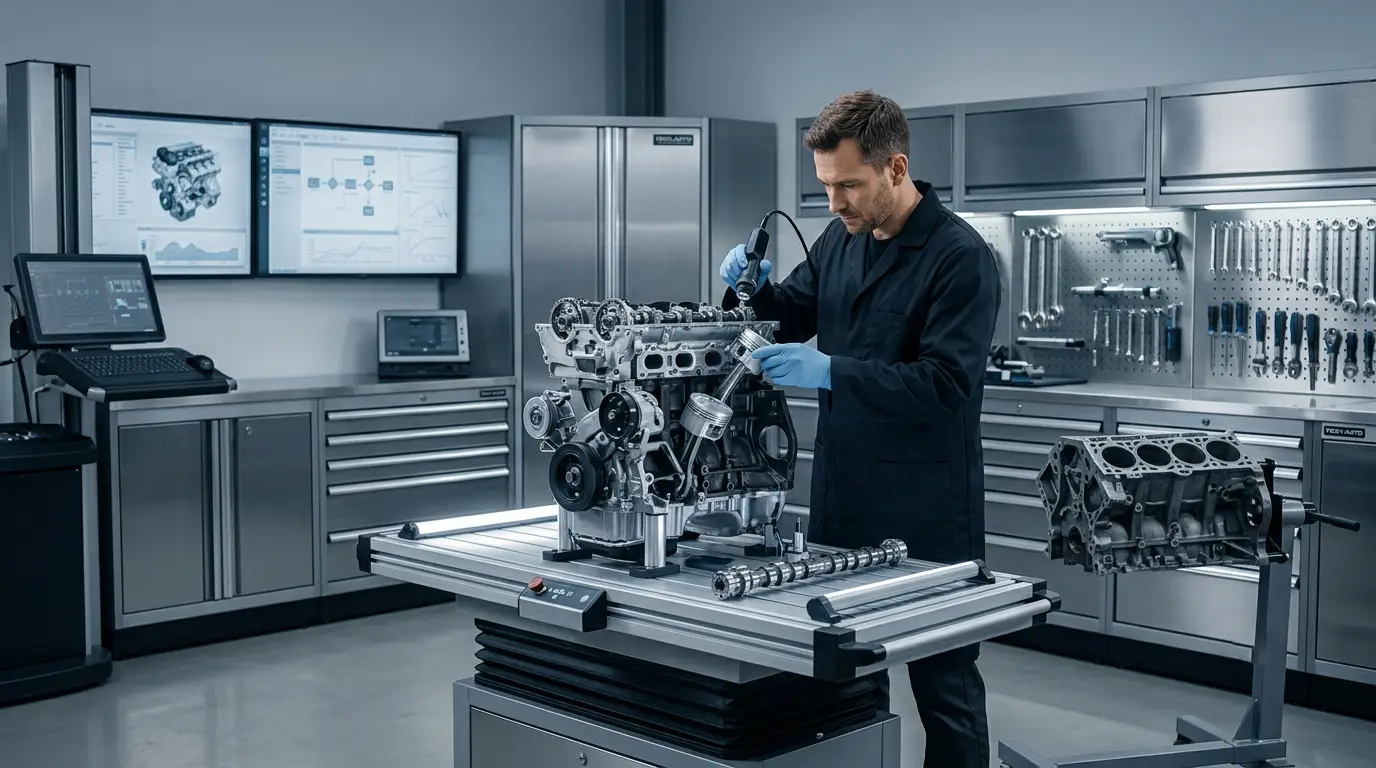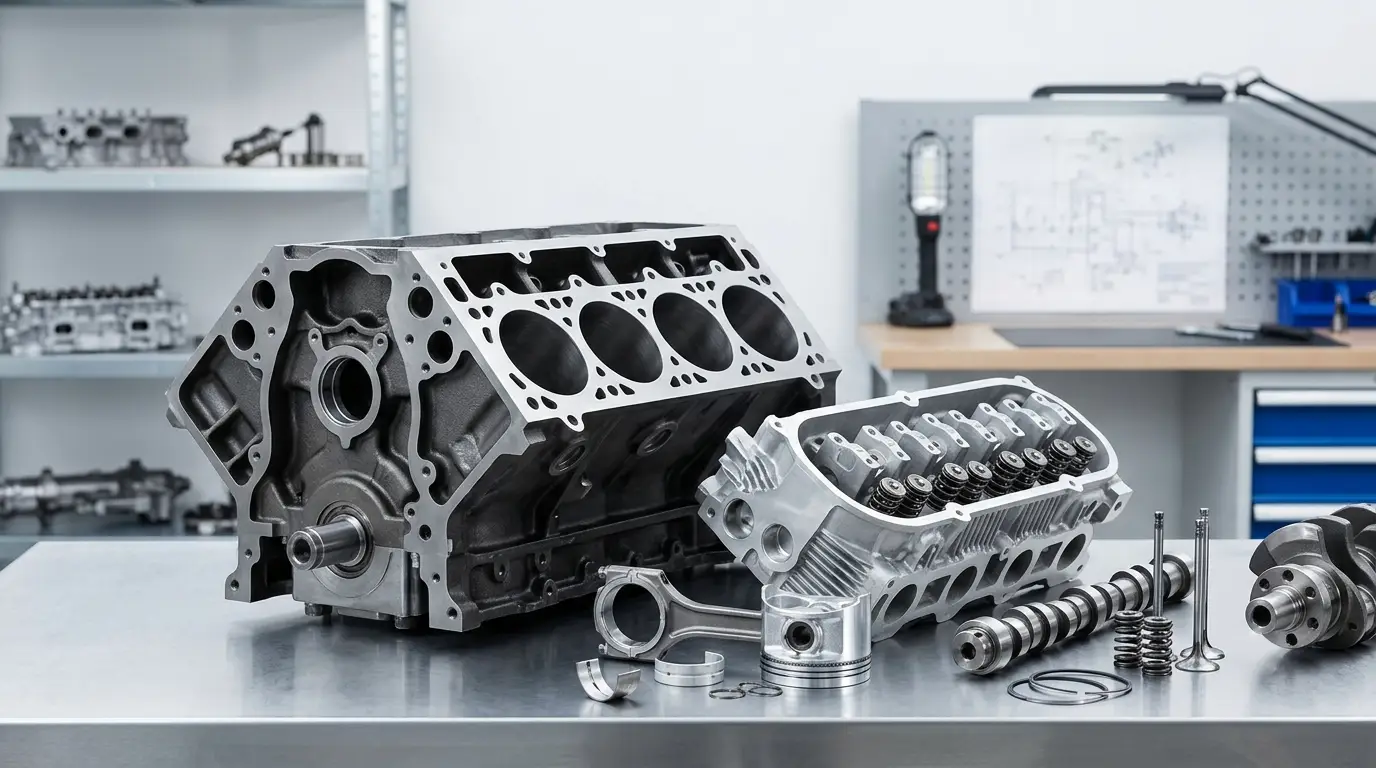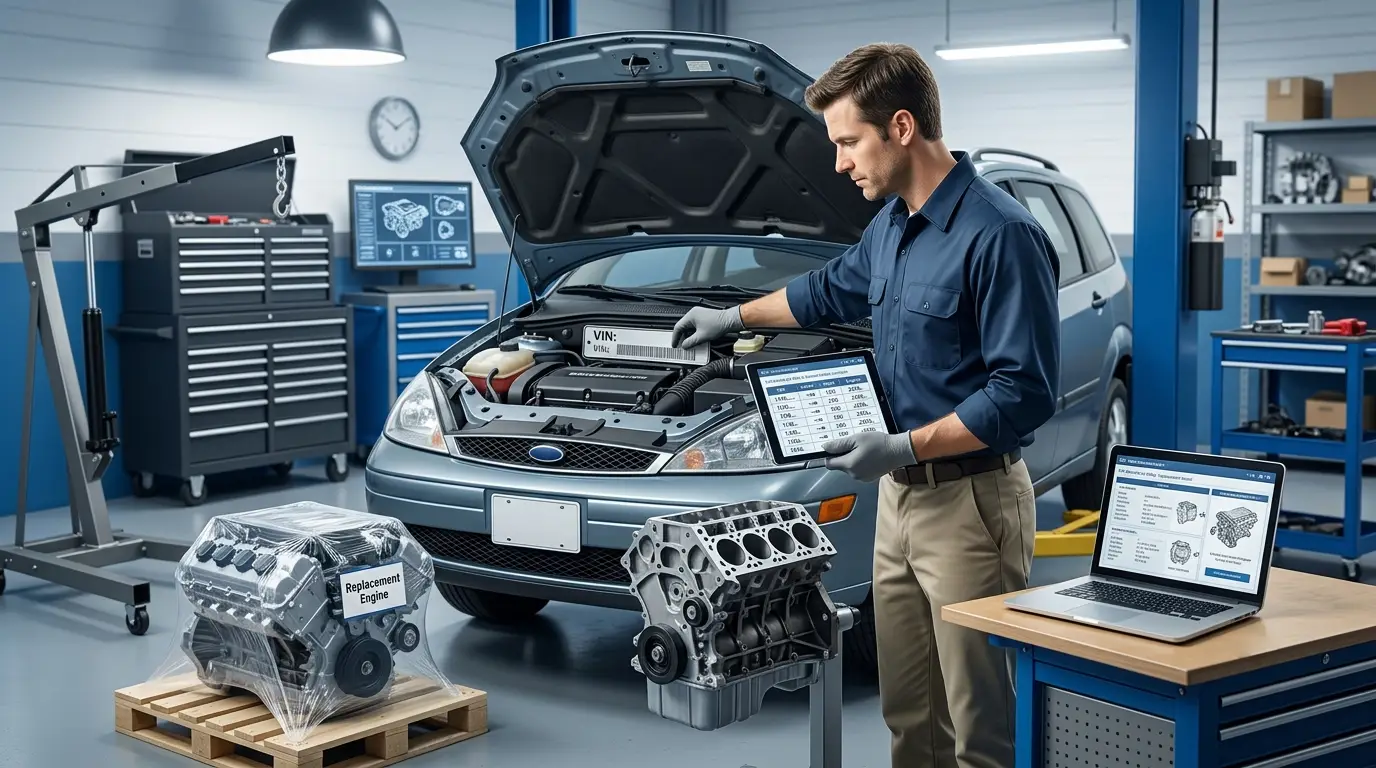

For more than a century, the automobile has been one of humanity’s most transformative inventions a blend of mechanical ingenuity and evolving technology. At the center of this evolution lies the engine, a masterpiece of engineering that has seen continuous innovation. From the early days of carburetors to the cutting-edge world of fuel injection and hybrid-electric systems, engine technology has come a long way, reshaping how we drive and how vehicles perform.
This journey of evolution isn’t just about better performance - it’s also about efficiency, sustainability, and precision. As global demands for cleaner, more powerful, and fuel-efficient engines grow, manufacturers have continuously refined their designs, pushing the limits of technology and science.
Let’s take a deep dive into how car engine technology evolved through the decades - and what lies ahead.
Before electronic controls and digital precision, there was the carburetor. The carburetor was the heart of early gasoline engines, managing the crucial task of mixing air and fuel in the proper ratio for combustion.
Invented in the late 19th century, the carburetor became the standard in automobiles for nearly 80 years. Its simple mechanical design relied on the Venturi effect, which drew air through a narrow passage, creating suction that pulled in fuel from a jet. This mixture was then delivered to the engine cylinders for combustion.
Advantages of Carburetors:
A. Simple mechanical design
B. Easy to repair and adjust
C. Inexpensive to produce
Disadvantages:
A. Inconsistent fuel mixture
B. Poor fuel economy
C. Limited performance at varying altitudes and temperatures
By the 1980s, as fuel efficiency standards and emissions regulations tightened, carburetors began to fade out. Automakers needed something more precise - and that’s where fuel injection entered the picture.
The shift from carburetors to fuel injection marked a technological revolution. Instead of relying on airflow and suction, fuel injection systems use pressurized fuel and electronically controlled injectors to deliver precise amounts of fuel directly into the engine’s cylinders or intake manifold.
The first forms of fuel injection appeared in aircraft engines in the early 1900s, but it wasn’t until the 1980s that it became standard in cars. The system’s efficiency was unmatched - it could adjust fuel delivery based on various factors such as throttle position, air temperature, and engine speed.
Key Benefits of Fuel Injection:
A. More precise fuel control
B. Better fuel economy and performance
C. Lower emissions
D. Easier cold starts
There are several types of fuel injection systems:
A. Throttle Body Injection (TBI): A single injector sprays fuel into the throttle body - an early step between carburetors and modern systems.
B. Multi-Port Fuel Injection (MPFI): Each cylinder has its own injector, offering improved fuel distribution.
C. Direct Fuel Injection (DFI): Fuel is injected straight into the combustion chamber for maximum efficiency and power.
By the 1990s, nearly every major automaker had phased out carburetors completely in favor of electronic fuel injection (EFI). This not only improved fuel economy but also allowed vehicles to meet stricter emission standards worldwide.
With fuel injection came the need for intelligent control systems. This led to the development of the Engine Control Unit (ECU) - the brain of the modern car.
The ECU constantly monitors a range of sensors throughout the vehicle - oxygen sensors, air flow meters, throttle position sensors, and more - to ensure optimal engine performance. It automatically adjusts the air-fuel ratio, ignition timing, and idle speed to maintain efficiency and reduce emissions.
This was a game-changer. Cars became more efficient, reliable, and adaptive. What used to require manual adjustments could now be handled by sophisticated computer systems in milliseconds.
While fuel injection improved efficiency, automakers still sought ways to boost performance without drastically increasing engine size. The solution came through forced induction - namely turbochargers and superchargers.
A turbocharger uses exhaust gases to spin a turbine that compresses incoming air, allowing more oxygen into the combustion chamber. This results in more power from the same engine size.
A supercharger, on the other hand, is driven mechanically by the engine’s crankshaft and provides instant power boost, though it slightly reduces fuel efficiency.
These technologies became increasingly popular in the 2000s, allowing smaller engines (like 4-cylinders) to produce power comparable to older V6 or V8 engines.
As the world grew more conscious about fuel prices and environmental impact, automakers began exploring hybrid powertrains - a combination of gasoline engines and electric motors.
A hybrid engine uses a traditional combustion engine paired with an electric motor that assists during acceleration or low-speed driving. When braking, the system recovers energy to recharge the battery through regenerative braking.
Advantages of Hybrid Engines:
A. Superior fuel efficiency
B. Lower emissions
C. Smooth, quiet operation
The Toyota Prius, introduced in the late 1990s, was the pioneer in hybrid technology and proved that performance and eco-friendliness could coexist. Today, nearly every major automaker offers hybrid models.
Today, the automotive industry is witnessing a historic shift from internal combustion to electric powertrains. Electric vehicles (EVs) are no longer futuristic concepts - they are mainstream reality.
Electric engines eliminate the need for gasoline, pistons, and traditional transmissions. Instead, they rely on electric motors powered by rechargeable lithium-ion batteries. The result? Instant torque, zero emissions, and minimal maintenance.
At the same time, hydrogen fuel cell technology is emerging as another clean energy alternative. Instead of burning fuel, these engines generate electricity through a chemical reaction between hydrogen and oxygen, producing only water vapor as a byproduct.
The Future of Engine Technology:
A. Solid-state batteries for longer EV range
B. Hybrid systems with regenerative power management
C. Hydrogen-powered vehicles for commercial transport
D. AI-Based ECUs for adaptive performance control
The evolution hasn’t stopped - it’s accelerating faster than ever.
This transformation affects more than just mechanics. Today’s car engines are smarter, cleaner, and more efficient than ever before. Whether you drive a compact hybrid or a high-performance turbocharged car, you’re benefiting from over a century of innovation.
Modern engines not only deliver power but also adapt to driving conditions. With systems like variable valve timing, cylinder deactivation, and start-stop technology, cars now balance performance with sustainability.
If you’re considering upgrading your vehicle, you can even opt for used engines that incorporate newer technologies without breaking the bank. Reliable used engines from reputable suppliers - like Auto Vehicle Parts - let you enjoy modern engineering at affordable prices.
The story of engine technology is one of constant innovation - from the mechanical precision of carburetors to the computer-controlled brilliance of fuel injection and beyond. Each era of development brought us closer to a balance between power, efficiency, and sustainability.
Today’s engines are smarter, cleaner, and more responsive than ever before. And as we move toward an electrified future, the evolution of the engine continues - not as the end of combustion, but as the beginning of a new age in automotive innovation.
So, whether you’re driving a classic carbureted car, a turbocharged powerhouse, or a silent electric marvel, you’re experiencing the legacy of more than a century of engineering excellence - a journey that’s far from over.
Carburetors were replaced because they could not precisely control fuel-air ratios. Fuel injection offers better efficiency, performance, and emissions control.
Port injection sprays fuel into the intake manifold, while direct injection delivers fuel directly into the combustion chamber, resulting in more power and efficiency.
Carburetors are rare today but still used in older vehicles, motorcycles, and some small engines like lawn mowers or classic cars.
Hybrid engines use electric power to assist the gasoline engine, reducing fuel use during idling or low-speed driving. Energy from braking is also reused.
The future is electric. With advancements in battery technology and renewable energy, electric and hydrogen powertrains will dominate the next generation of vehicles.