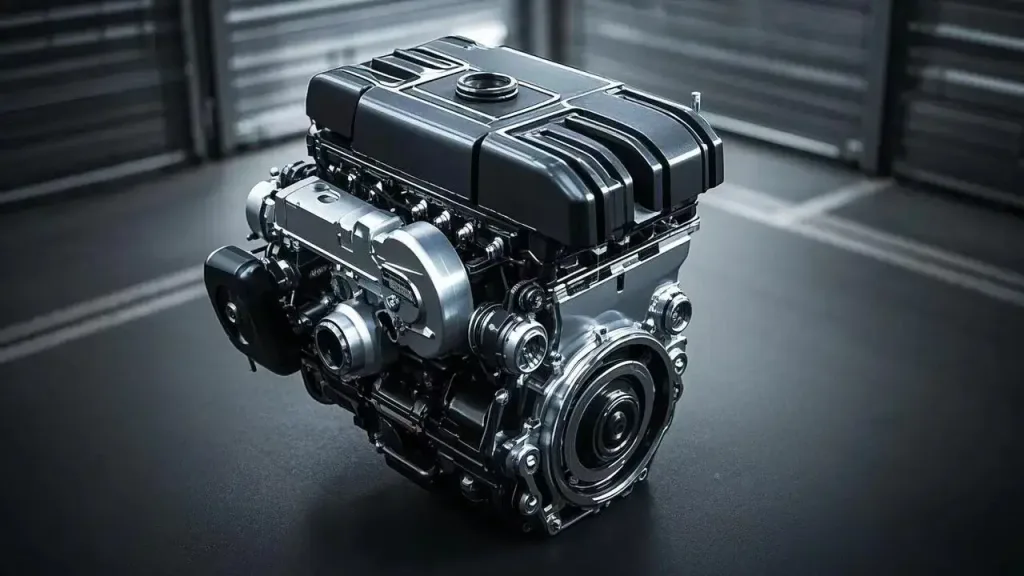

Your car’s engine is its heart - the source of all power and performance. Whether you’re accelerating on a highway or cruising through city traffic, everything begins with the engine. But not all engines are created equal. Over the decades, automotive technology has evolved, giving rise to a wide variety of engine types designed to meet different needs - from raw power to efficiency and eco-friendliness.
Understanding the types of car engines available today can help you make better decisions when buying or maintaining a vehicle. From traditional gasoline engines to advanced hybrids and electric powertrains, each has unique benefits and trade-offs. So, let’s dive into how these engines work and which one might be right for you.
A car engine converts fuel into motion. It works on the principle of internal combustion, where air and fuel are mixed, compressed, and ignited to create controlled explosions that move the pistons. These pistons drive the crankshaft, which ultimately turns your car’s wheels.
Modern engines combine mechanical precision, electronic control, and fuel efficiency technology to deliver smooth and reliable power. However, depending on their design, fuel type, and configuration, engines can vary significantly in performance and economy.
The inline engine, also known as a straight engine, is one of the most common types found in compact cars and sedans. In this configuration, all the cylinders are arranged in a single straight line.
Advantages:
A) Simple and compact design
B) Easy to manufacture and maintain
C) Smooth power delivery
Disadvantages:
A) Limited power output compared to V or flat engines
B) Less balanced at higher cylinder counts
The inline-four (I4) engine is the most popular configuration worldwide because it offers a great balance between power, fuel efficiency, and affordability. You’ll find this setup in vehicles like the Toyota Corolla, Honda Civic, and many others.
The V-type engine is designed with cylinders arranged in two angled banks, forming a “V” shape. Common configurations include V6 and V8 engines. These are usually found in performance cars, SUVs, and trucks.
Advantages:
A) High power output
B) Compact design for multi-cylinder setups
C) Smooth and responsive acceleration
Disadvantages:
A) Higher fuel consumption
B) More complex and costly maintenance
V6 engines are a popular middle ground - offering strong performance without excessive fuel use. Meanwhile, V8 engines are known for their incredible power and torque, often used in sports and muscle cars.
Flat or boxer engines have cylinders arranged horizontally in two opposing banks. Each piston moves in and out in opposite directions, creating a balanced and low-vibration performance.
Advantages:
A) Lower center of gravity for improved handling
B) Smooth operation with minimal vibration
C) Excellent balance
Disadvantages:
A) Complex and costly to repair
B) Requires more space horizontally
Brands like Subaru and Porsche famously use boxer engines in models like the Subaru Outback and Porsche 911 because of their stability and balanced performance.
The rotary engine, also known as the Wankel engine, uses a triangular rotor instead of pistons. This design allows for high RPM and smooth operation in a lightweight package.
Advantages:
A) Compact and lightweight
B) High RPM range and smooth acceleration
C) Fewer moving parts
Disadvantages:
A) Poor fuel economy
B) High oil consumption
C) Less torque than piston engines
Mazda’s RX series, particularly the RX-7 and RX-8, made the rotary engine famous for its smooth and unique performance characteristics. However, due to emissions and fuel efficiency challenges, rotary engines are rare today.
Diesel engines operate differently from gasoline engines. Instead of using spark plugs to ignite fuel, they compress air to extremely high pressures, which heats the air enough to ignite diesel fuel when it’s injected.
Advantages:
A) Excellent fuel efficiency
B) Greater torque output
C) Long-lasting and durable
Disadvantages:
A) Noisier and heavier than gasoline engines
B) More expensive to maintain
C) Emits more nitrogen oxides (NOx)
Diesel engines are common in trucks, SUVs, and heavy-duty vehicles due to their torque and efficiency. Models like the Ford F-250 Super Duty and some BMW diesel variants are examples.
Hybrid engines combine an internal combustion engine with an electric motor. The motor assists the engine during acceleration and low-speed driving, while regenerative braking recharges the battery.
Advantages:
A) Excellent fuel economy
B) Reduced emissions
C) Smooth performance
Disadvantages:
A) Higher initial purchase cost
B) Battery replacement can be expensive
C) Complex technology
Toyota’s Prius popularized the hybrid engine, but today, many brands - like Honda, Hyundai, and Ford - offer hybrid versions of their top models.
Electric vehicles (EVs) use electric motors powered by rechargeable lithium-ion batteries. They don’t use internal combustion at all, making them the cleanest and most efficient option.
Advantages:
A) Zero emissions
B) Instant torque and smooth acceleration
C) Lower running and maintenance costs
Disadvantages:
A) Limited range compared to gasoline vehicles
B) Longer refueling (charging) time
C) Expensive battery replacement
Brands like Tesla, Rivian, and Hyundai have pushed EV technology forward. As battery efficiency and charging infrastructure improve, electric engines are rapidly becoming the future of mobility.
When deciding which type of engine is right for you, consider your driving style, budget, and environmental priorities.
A) For everyday commuting: Inline-four or hybrid engines offer reliability and fuel efficiency.
B) For performance enthusiasts: V6 or V8 engines deliver thrilling power and acceleration.
C) For eco-conscious drivers: Hybrid or electric engines minimize emissions and save on fuel costs.
D) For heavy towing or long-distance travel: Diesel engines provide the torque and durability you need.
Each type offers unique benefits. If you value simplicity and low maintenance, a traditional gasoline engine may suffice. But if sustainability and long-term savings are your goals, a hybrid or electric model could be the smarter investment.
As automakers move toward sustainability, the future of engines is changing fast. Electric and hybrid technologies are improving in both performance and affordability. Many brands plan to phase out traditional combustion engines entirely within the next two decades.
Additionally, innovations like hydrogen fuel cell engines and synthetic fuels are on the rise. These emerging technologies aim to combine the power of combustion with the cleanliness of electricity, bridging the gap toward fully carbon-neutral mobility.
The automotive world is shifting toward smarter, cleaner, and more efficient engines - and soon, the way we define “engine” may change altogether.
The type of engine under your car’s hood shapes your driving experience, maintenance costs, and environmental footprint. Whether you prefer the roar of a V8, the efficiency of a hybrid, or the silence of an electric motor, understanding how different engines work helps you make informed decisions.
As technology continues to evolve, engines are becoming more efficient, powerful, and environmentally friendly. Choosing the right one depends on what you value most - performance, economy, or sustainability. No matter your preference, one thing is certain: the engine will always remain the beating heart of every vehicle.
The most common engine type today is the inline-four (I4) engine. It provides a perfect balance between performance, fuel economy, and cost.
Hybrid and electric engines are the most fuel-efficient. Among traditional engines, diesel typically offers better mileage than gasoline.
Electric engines are more efficient and environmentally friendly, but gasoline engines still offer greater range and faster refueling times.
With proper maintenance, most car engines can last between 150,000 and 250,000 miles. Electric motors can last even longer due to fewer moving parts.
Engine swaps are possible but require significant modification. For example, converting a gasoline car into an electric one is complex and expensive.