
Your vehicle's transmission is one of its most complex and expensive components. Whether you drive an automatic, manual, or continuously variable transmission (CVT), the transmission is responsible for transferring engine power to the wheels while ensuring smooth gear changes. Because of its complexity, even minor transmission issues can quickly develop into costly repairs if left unchecked.
A professional transmission inspection helps identify problems before they become major failures. During the inspection, technicians evaluate the condition of the transmission, inspect related components, perform electronic diagnostics, and assess overall performance. The goal is to detect wear, leaks, electrical faults, or mechanical issues early, allowing for timely repairs that can extend the life of your transmission.
If you've noticed delayed shifting, slipping gears, unusual noises, transmission warning lights, or fluid leaks, scheduling a professional inspection is one of the smartest decisions you can make.
Below is a step-by-step guide explaining what typically happens during a professional transmission inspection.
Early detection can prevent expensive repairs.
A transmission inspection helps:
Routine inspections are especially valuable for high-mileage vehicles and those used for towing or heavy-duty driving.
Understanding the problem is the first step.
Before inspecting the vehicle, the technician will ask about the symptoms you've experienced.
Common questions include:
This information helps narrow down possible causes before testing begins.
Technicians inspect the transmission from the outside.
The first physical inspection focuses on the transmission housing and surrounding components.
The technician checks for:
External damage may indicate more serious internal problems.
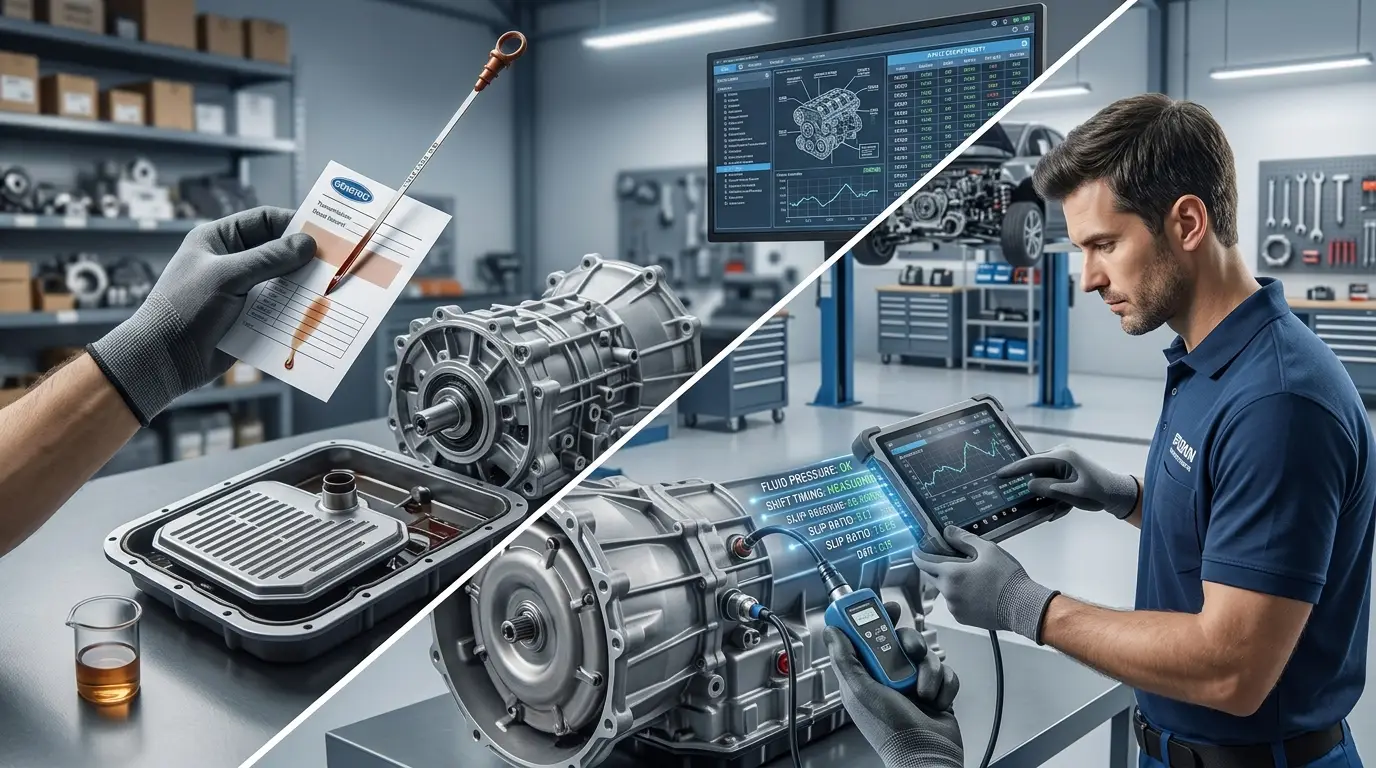
Transmission fluid reveals the health of the car transmission.
Fluid condition is one of the most important indicators of transmission health.
The technician checks:
Low transmission fluid can cause:
Healthy transmission fluid is typically:
Dark brown or black fluid often indicates overheating or excessive wear.
Burnt-smelling fluid may indicate:
Technicians also inspect for:
These contaminants may signal internal transmission wear.
Fluid leaks are carefully identified.
Transmission fluid leaks are a common cause of transmission failure.
Technicians inspect:
Even small leaks should be repaired promptly to prevent low fluid levels.
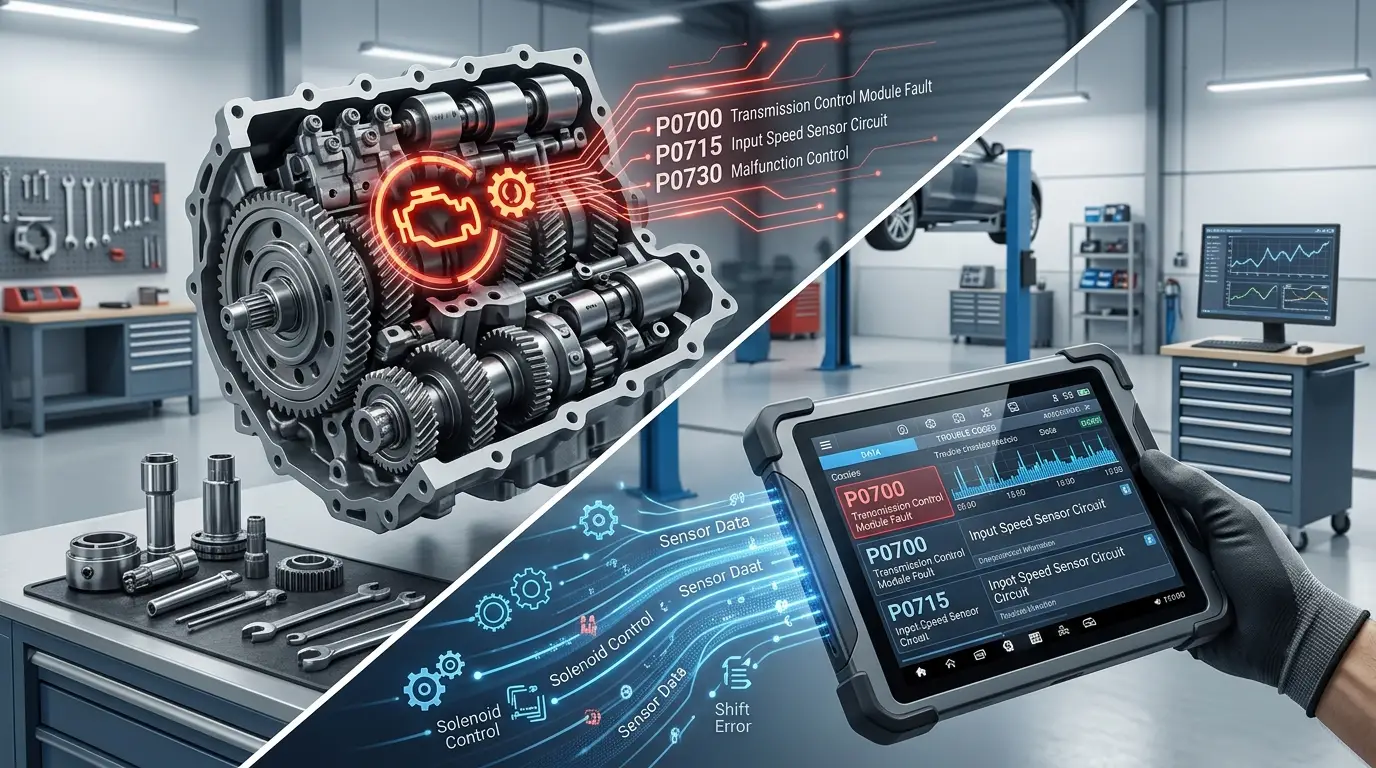
Modern vehicles rely heavily on computer diagnostics.
A professional scan tool is connected to the vehicle's OBD-II diagnostic port.
The technician checks for:
Common transmission-related codes include:
Electronic diagnostics often identify issues before mechanical symptoms become severe.
The TCM controls shift operation.
The technician verifies proper operation of the Transmission Control Module by checking:
A faulty TCM can mimic mechanical transmission problems.
Real-world driving reveals many transmission issues.
The technician drives the vehicle under different conditions to evaluate transmission performance.
During the road test, they monitor:
Different driving conditions are tested, including:
Road testing helps identify intermittent problems that may not appear during a stationary inspection.
Each gear change is closely monitored.
The technician checks for:
Smooth and consistent shifting indicates healthy transmission operation.
The torque converter plays a critical role in automatic transmissions.
Technicians evaluate:
Torque converter problems often resemble transmission failure but may require different repairs.
Mounts support the transmission and reduce vibration.
Technicians inspect for:
Damaged mounts can cause vibration, noise, and poor shifting.
Power must be transferred efficiently.
Depending on the vehicle type, technicians inspect:
Problems in these components can sometimes be mistaken for transmission issues.
Transmission temperature affects reliability.
Automatic transmissions rely on cooling systems to prevent overheating.
Technicians inspect:
Overheating is one of the leading causes of premature transmission failure.
Pressure testing evaluates internal operation.
For advanced diagnostics, technicians may measure hydraulic pressure inside the transmission.
This helps identify:
Pressure testing is especially useful when electronic diagnostics do not reveal the cause of shifting problems.
Internal wear often leaves visible evidence.
If the transmission pan is removed, technicians inspect:
Large amounts of metal debris usually indicate significant internal wear.
The inspection concludes with a detailed evaluation.
The technician typically provides:
This report helps you make informed decisions about transmission service or replacement.
A professional inspection may reveal:
Many of these issues can be repaired if detected early.
Consider a professional inspection if you notice:
Even without symptoms, periodic inspections are beneficial for vehicles with high mileage or heavy use.
Routine inspections offer several advantages:
Preventive maintenance is almost always less expensive than major transmission repairs.
A professional transmission inspection is much more than a quick visual check. It combines electronic diagnostics, fluid analysis, road testing, leak detection, and mechanical inspections to evaluate the overall health of one of your vehicle's most important systems.
By identifying issues such as worn components, low fluid, faulty sensors, or electronic malfunctions early, technicians can recommend repairs before they turn into expensive transmission failures. Whether you're experiencing shifting problems or simply following a preventive maintenance schedule, a thorough transmission inspection is an excellent way to protect your vehicle and avoid unexpected repair bills.
Most standard inspections take between 30 minutes and 90 minutes, depending on the vehicle and the complexity of the issue.
Yes. Fluid analysis, pressure testing, electronic diagnostics, and inspection of the transmission pan can reveal signs of internal wear or damage.
Yes. Routine inspections can identify developing problems before noticeable symptoms appear, helping prevent costly repairs.
In most cases, yes. A road test allows technicians to evaluate shift quality, gear engagement, acceleration, and overall transmission performance under real driving conditions.
Follow the technicians recommendations promptly. Addressing minor issues early - such as fluid leaks, worn solenoids, or sensor faults - can prevent more extensive and expensive transmission repairs later.