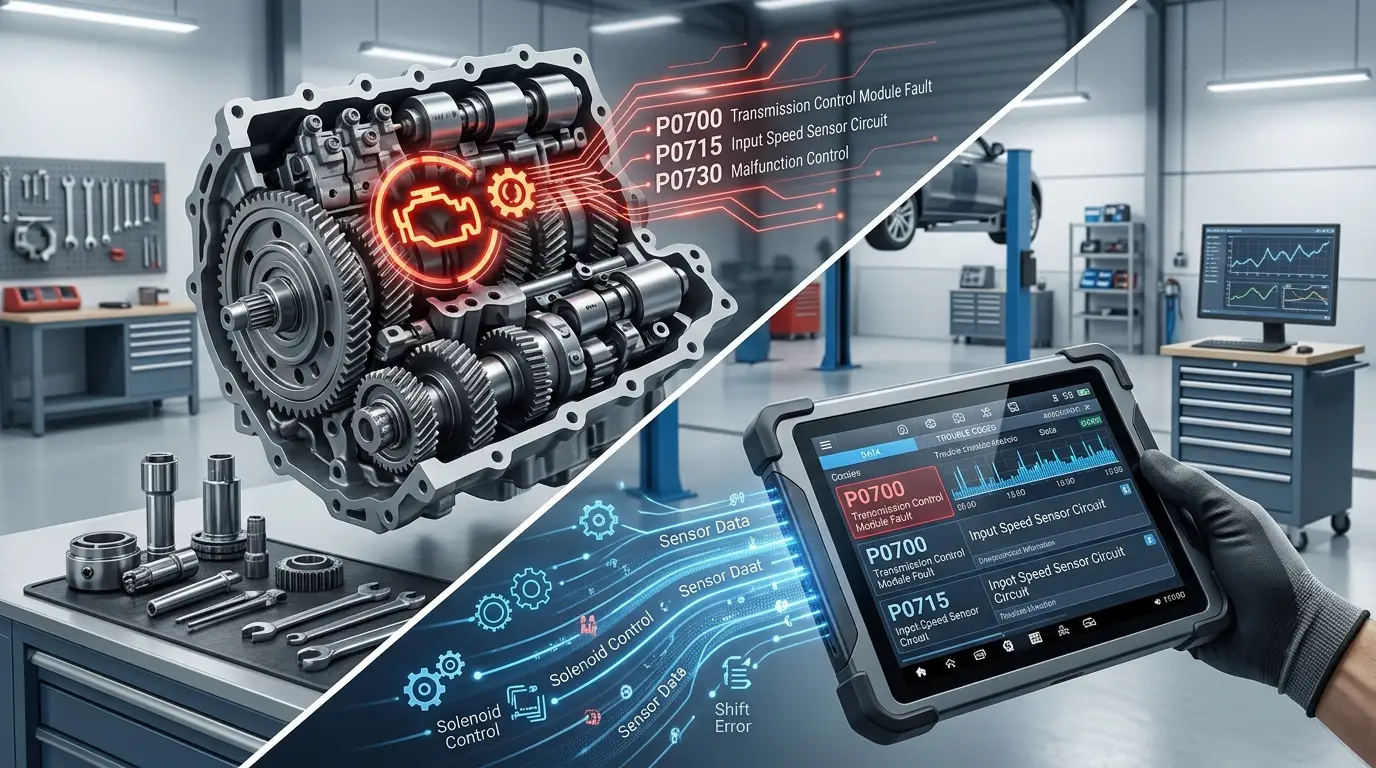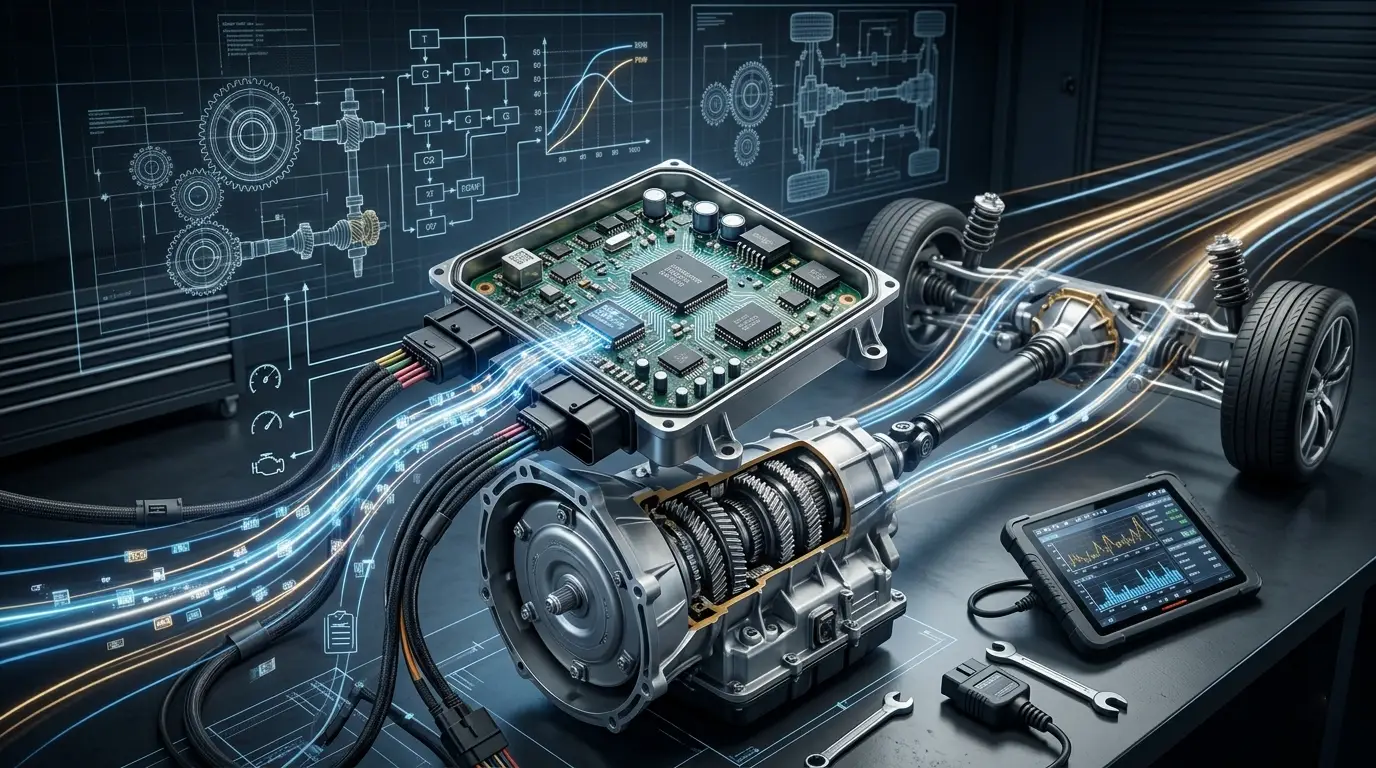


Modern vehicles are equipped with sophisticated onboard diagnostic systems (OBD-II) that continuously monitor the health of the engine, transmission, and other critical components. When the system detects an issue, it stores a Diagnostic Trouble Code (DTC) and may illuminate the Check Engine Light or Transmission Warning Light.
While a transmission error code doesn't always mean your transmission needs to be replaced, it does indicate that something isn't functioning as intended. The issue could range from a faulty sensor or low transmission fluid to internal mechanical damage.
Understanding common transmission error codes can help you identify potential problems early, communicate effectively with your mechanic, and avoid expensive repairs.
Below is a detailed guide to the most common transmission-related error codes, their causes, symptoms, and possible solutions.
Transmission error codes are diagnostic trouble codes generated by your vehicle's onboard computer.
The Transmission Control Module (TCM) or Powertrain Control Module (PCM) monitors various sensors and transmission components. If it detects abnormal operation, it records a code that technicians can retrieve using an OBD-II scanner.
These codes typically begin with the letter P (Powertrain) followed by four numbers, such as P0700 or P0750.
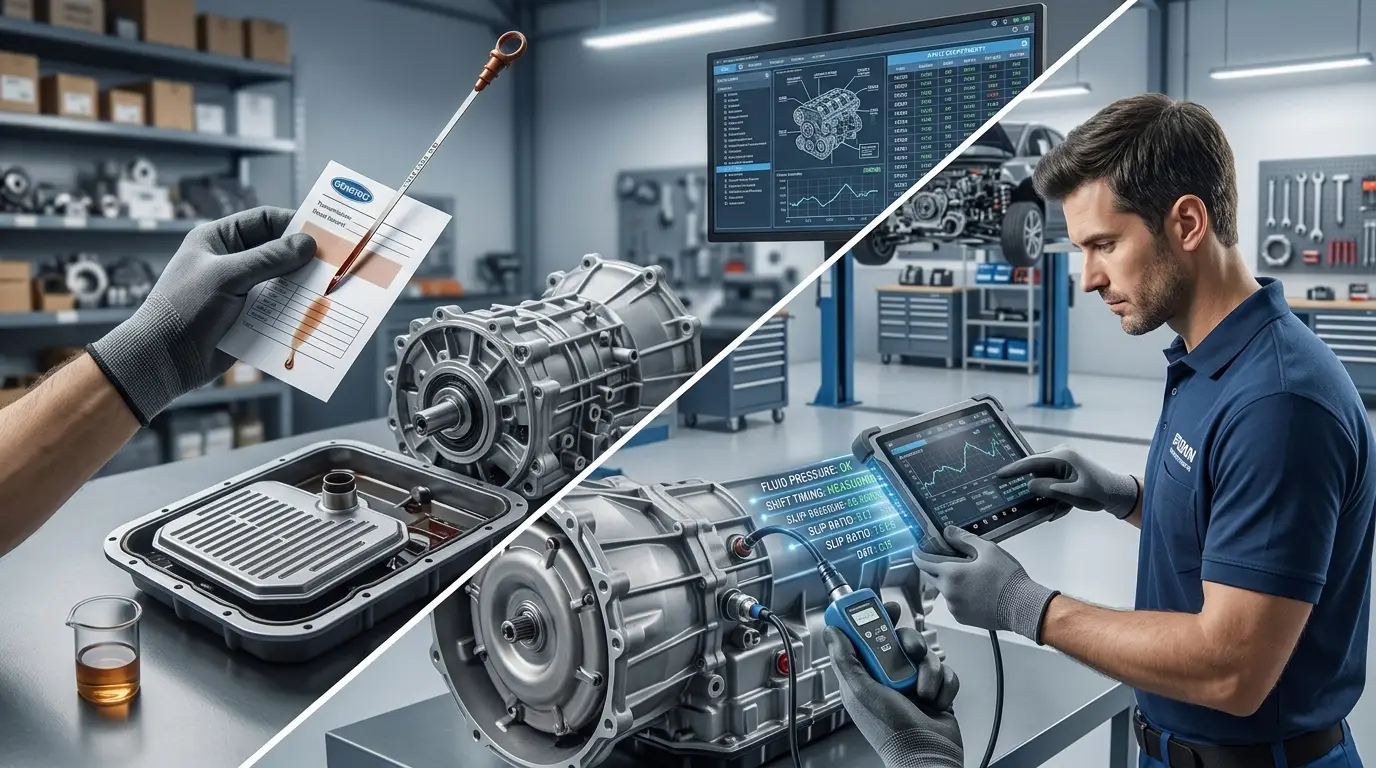
Before replacing any parts, technicians typically:
Accurate diagnosis is essential because one fault can trigger multiple codes.
The P0700 code indicates that the Transmission Control Module has detected a fault and has requested the Check Engine Light to turn on.
P0700 is a general code. Additional transmission-specific codes must be scanned to identify the exact issue.
The transmission cannot accurately read the speed of the input shaft.
Inspect the speed sensor, repair damaged wiring, or replace the sensor if necessary.
The output speed sensor is not providing accurate information to the transmission control system.
Replace the faulty sensor and inspect the electrical circuit for damage.
The transmission is not achieving the expected gear ratio during operation.
A complete transmission inspection is recommended to determine whether repairs or replacement are required.
The torque converter clutch is not operating correctly.
Inspect the torque converter, transmission fluid, and electrical components.
The transmission control module cannot properly operate Shift Solenoid A.
Test the solenoid and replace it if necessary. A transmission fluid service may also be recommended.
The transmission has detected a malfunction involving Shift Solenoid B.
Inspect the electrical circuit and replace the faulty solenoid if needed.
The TCM has detected improper operation of Shift Solenoid C.
Perform electrical testing and inspect hydraulic pressure if required.
The pressure control solenoid is not regulating hydraulic pressure correctly.
Replace the pressure control solenoid and inspect fluid condition.
The transmission cannot properly control hydraulic pressure through Solenoid C.
Inspect the valve body, replace damaged components, and perform a fluid service if necessary.
The transmission fluid pressure sensor is providing incorrect readings.
Inspect the sensor, verify fluid level, and repair hydraulic issues if present.
The transmission is operating with insufficient hydraulic pressure.
Inspect for leaks, replace the filter, check the pump, and restore proper fluid levels.
Ignoring transmission codes can lead to:
Addressing problems early often prevents expensive repairs later.
Regular maintenance can reduce the likelihood of transmission-related trouble codes.
Recommended practices include:
Preventive maintenance helps extend transmission life and improve overall vehicle performance.
Transmission error codes are valuable diagnostic tools that provide early warnings of potential problems. While a trouble code does not always indicate major transmission damage, it should never be ignored. Issues such as faulty sensors, shift solenoids, low fluid levels, or electrical faults can often be repaired before they lead to costly transmission failure.
If your Check Engine Light or Transmission Warning Light comes on, use an OBD-II scanner or have the vehicle inspected by a qualified technician. Prompt diagnosis and timely repairs can help maintain smooth shifting, improve reliability, and extend the life of your transmission.
Some minor issues may allow limited driving, but continuing to operate the vehicle can worsen the problem. Its best to diagnose the code as soon as possible.
Not necessarily. P0700 is a general transmission fault code that indicates additional transmission-specific codes should be scanned to identify the exact issue.
Yes. Low or contaminated transmission fluid can cause slipping, overheating, improper hydraulic pressure, and multiple diagnostic trouble codes.
No. Clearing the code only removes the warning temporarily. If the underlying issue remains, the code will usually return.
You can use a compatible OBD-II scanner to retrieve diagnostic trouble codes. Advanced scanners can also display live transmission data for more accurate troubleshooting.