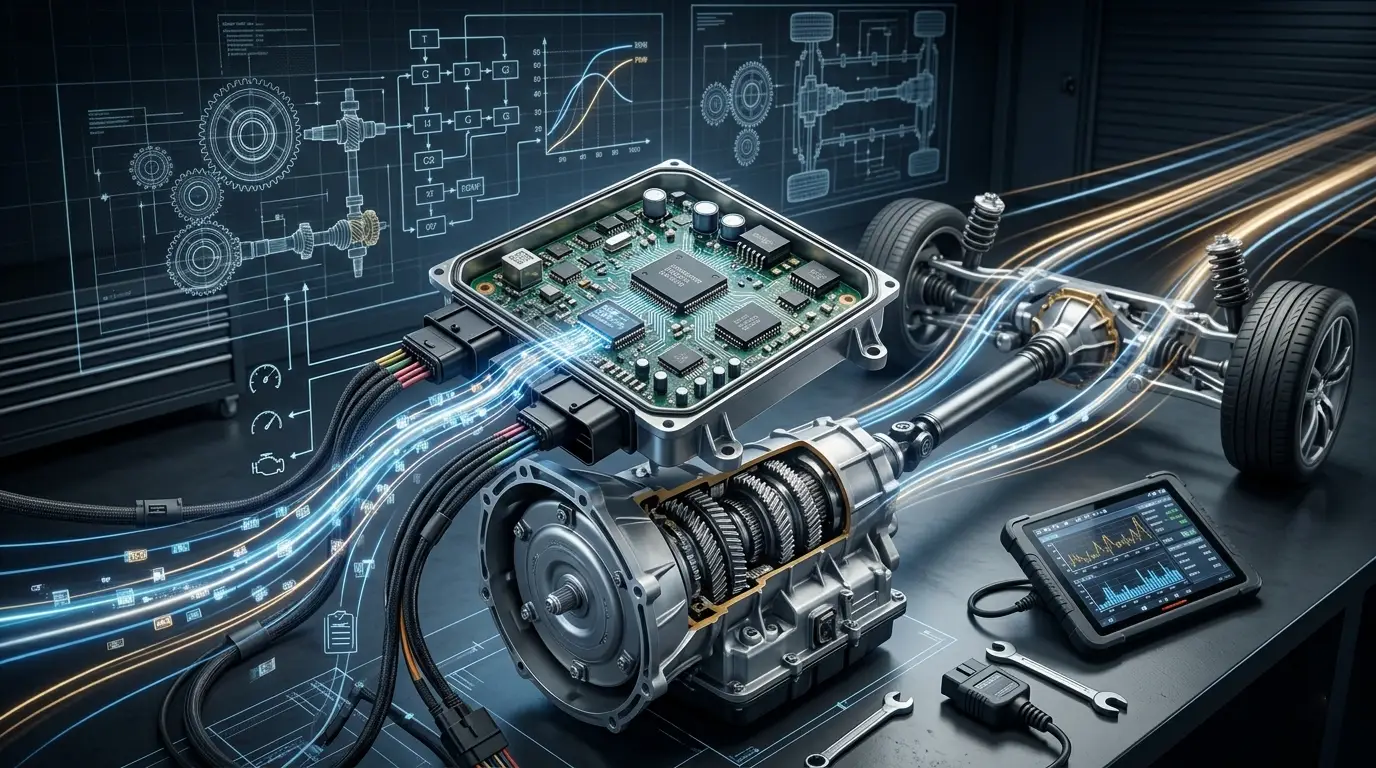

Modern vehicles rely on dozens of electronic components to deliver smooth, efficient, and reliable performance. One of the most important - but often overlooked - components is the Transmission Control Module (TCM).
The TCM acts as the brain of your vehicle's transmission system. It processes information from various sensors and determines exactly when and how the transmission should shift gears. Without a properly functioning TCM, even a mechanically healthy transmission can experience poor performance, rough shifting, and reduced fuel efficiency.
Understanding how the TCM works and recognizing early warning signs of failure can help you avoid costly repairs and maintain optimal vehicle performance.
A Transmission Control Module is an electronic control unit responsible for managing the operation of an automatic transmission.
Its primary functions include:
In some vehicles, the TCM operates as a separate module. In others, its functions are integrated into the Engine Control Module (ECM) or Powertrain Control Module (PCM).
Regardless of design, the goal remains the same: ensure smooth and efficient gear changes.
The TCM constantly collects information from sensors throughout the vehicle.
It analyzes data such as:
Based on this information, the TCM sends commands to transmission components, including:
The module adjusts shifting patterns in real time to match driving conditions.
For example:
This constant adjustment helps balance performance, efficiency, and drivability.
The TCM relies on several systems to perform correctly.
These sensors provide critical operating data.
Common inputs include:
The TCM controls solenoids that direct hydraulic fluid through the transmission.
These solenoids determine:
The TCM manages torque converter lockup to improve:
A properly functioning TCM has a direct impact on how your vehicle feels and performs.
The TCM ensures gear changes happen smoothly and at the right time.
Benefits include:
By selecting optimal shift points, the TCM helps maximize engine power during acceleration.
This results in:
Efficient shifting reduces engine workload.
The TCM helps improve fuel economy by:
Proper control of hydraulic pressure and shift timing reduces internal wear.
This helps protect:
Many modern TCMs feature adaptive learning.
They can adjust shifting behavior based on:
This creates a more personalized driving experience.
A faulty TCM can cause numerous performance issues.
Watch for these warning signs:
These symptoms often become more noticeable over time.
When the TCM detects a serious problem, it may activate limp mode.
Limp mode limits transmission operation to protect internal components.
Common characteristics include:
Although the vehicle may remain drivable, immediate diagnosis is recommended.
Several issues can affect TCM performance.
Excessive heat can damage sensitive electronics.
Common causes include:
Dirty or degraded transmission fluid can affect sensor accuracy and solenoid operation.
Outdated or corrupted software may cause:
Manufacturers occasionally release software updates to correct these issues.
Water exposure can damage circuit boards and electrical connections.
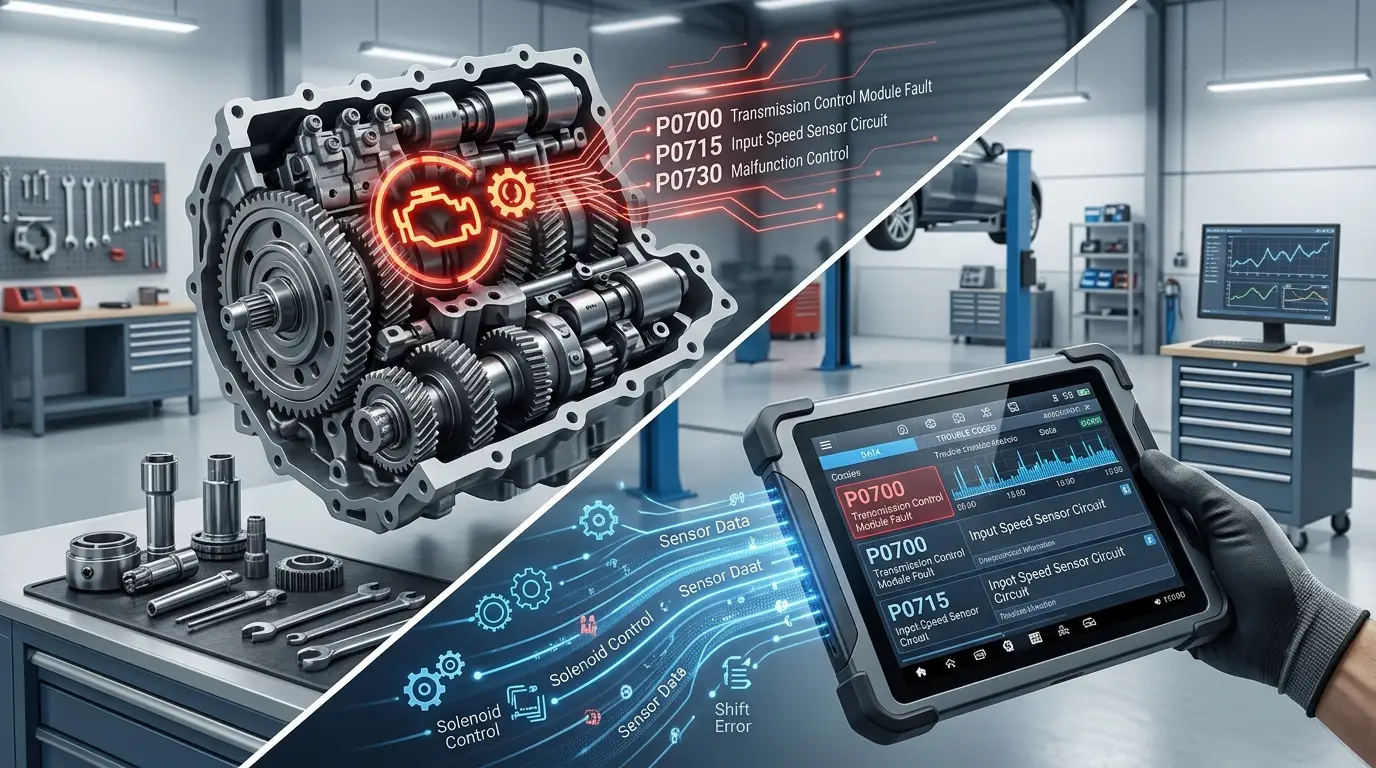
Because TCM issues often mimic mechanical transmission failures, proper diagnosis is essential.
Technicians typically perform:
Advanced scan tools can monitor live transmission data to identify specific faults.
In some cases, yes.
Possible solutions include:
However, severe internal damage may require TCM replacement.
Some modules also require:
Professional installation is often necessary.
Follow these maintenance tips to protect your TCM:
Preventive maintenance helps reduce stress on both the TCM and transmission.
The Transmission Control Module plays a critical role in modern vehicle performance. By managing shift timing, hydraulic pressure, and transmission behavior, the TCM helps deliver smooth acceleration, improved fuel economy, and longer transmission life.
When the TCM fails, symptoms can range from rough shifting and poor performance to limp mode and complete transmission malfunction.
Understanding how the TCM works and recognizing early warning signs can help you address problems before they lead to expensive repairs.
If you notice unusual shifting behavior or transmission warning lights, a professional diagnostic inspection can determine whether the issue lies with the TCM or another transmission component.
Yes. Incorrect shift timing and pressure control can increase wear on internal transmission components.
Yes. Most vehicles illuminate the check engine or transmission warning light when TCM-related faults occur.
Costs vary depending on the vehicle, programming requirements, and module design, but replacement can range from a few hundred to over a thousand dollars.
Driving may still be possible, but it can cause poor performance, activate limp mode, and potentially increase transmission wear.
In many vehicles, yes. Replacement TCMs often require programming or calibration to communicate properly with the vehicles systems.