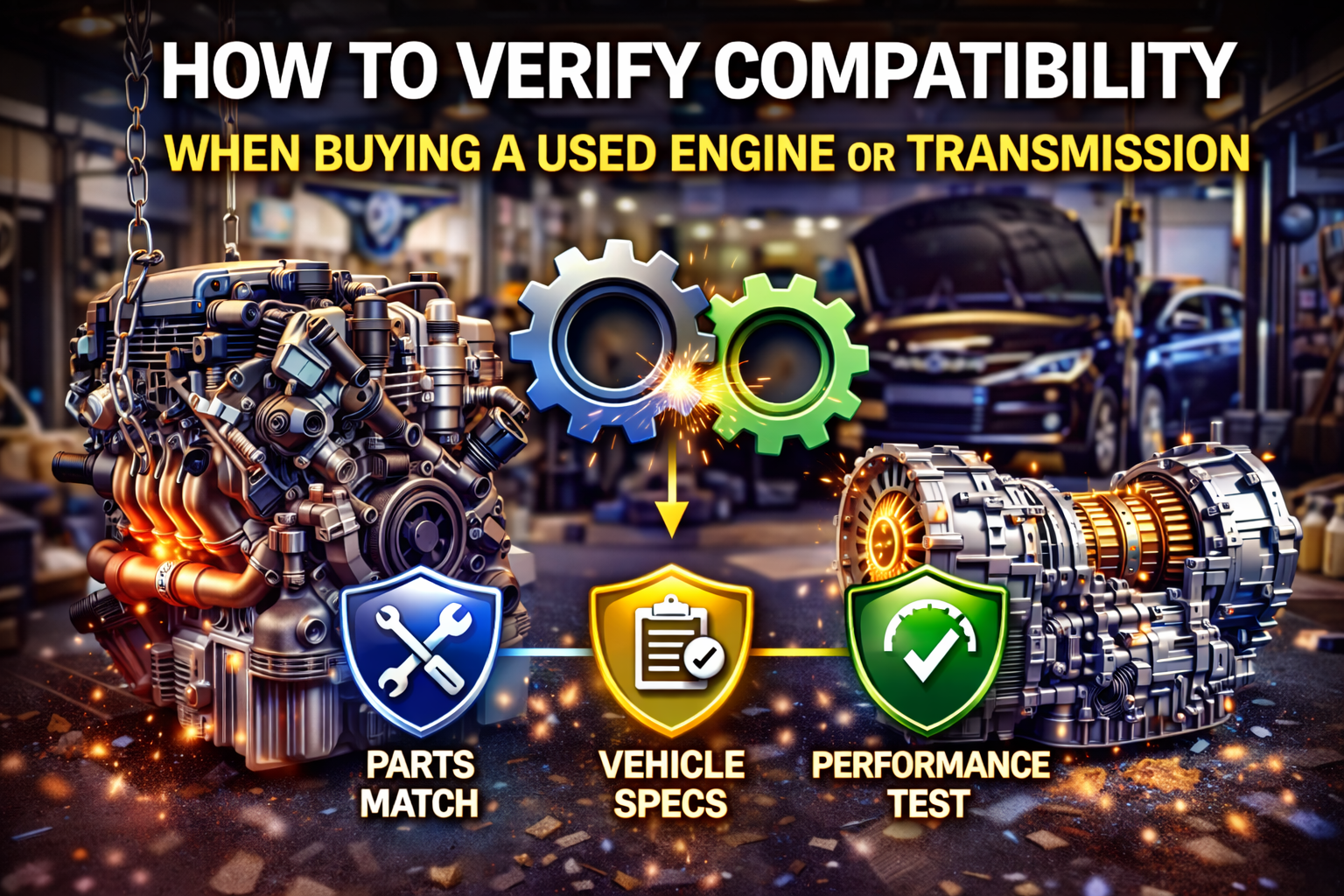
Buying a used engine or transmission can save you a significant amount of money - but only if you get the right match for your vehicle. One wrong detail, whether it’s a mismatched engine code or incompatible transmission type, can lead to installation issues, poor performance, or even complete failure.
Think of it like trying to fit a puzzle piece into the wrong spot - it might look similar, but it simply won’t work. That’s why verifying compatibility is one of the most critical steps before making a purchase.
Below is a comprehensive pointer-based guide to help you ensure the used engine or transmission you’re buying is a perfect fit for your vehicle.
The most important compatibility reference.
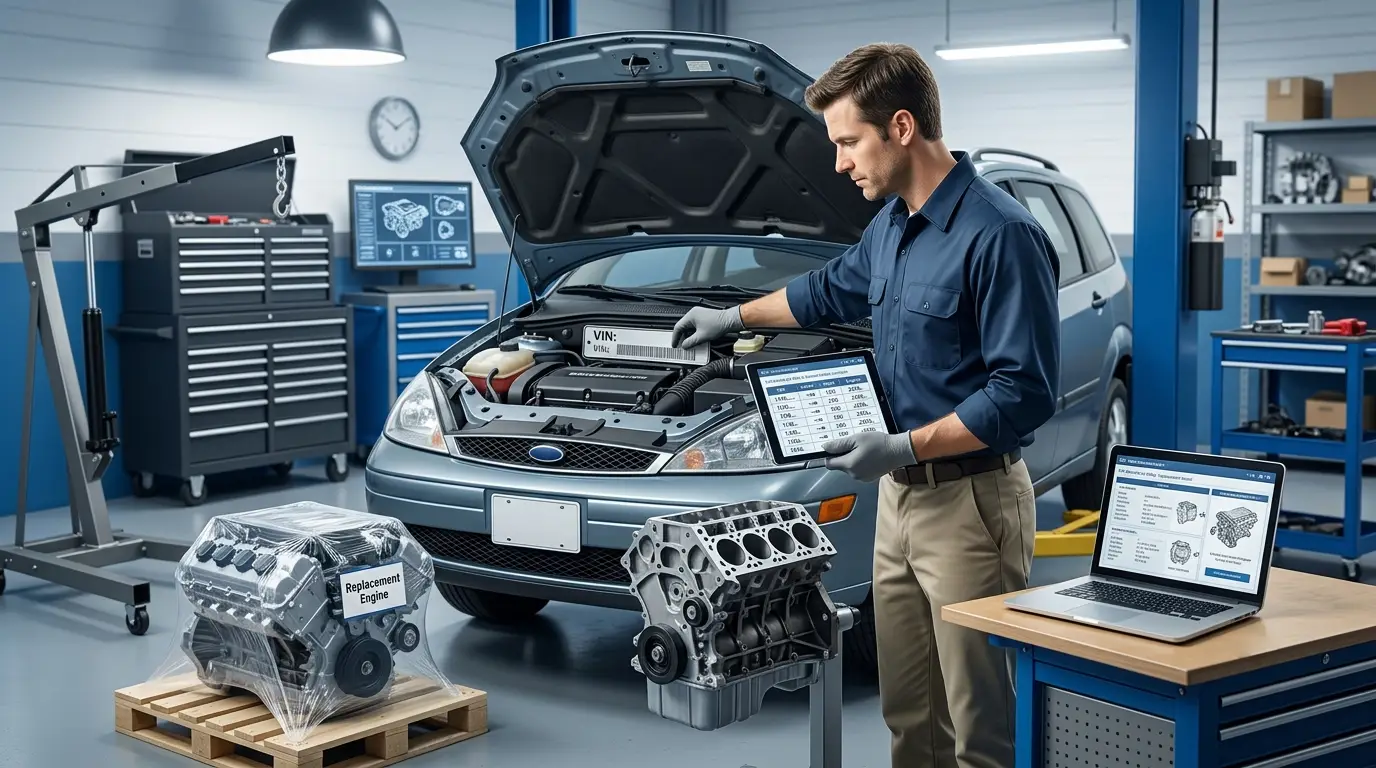
The VIN provides detailed information about your vehicle, making it the most reliable starting point.
Ensures exact mechanical compatibility.
Even slight differences in codes can result in major compatibility issues.
Basic but essential verification step.
Some parts may fit across multiple years, but not always - small updates can cause mismatches.
Different trims may have different specs.
Always match the exact variant of your vehicle for best results.
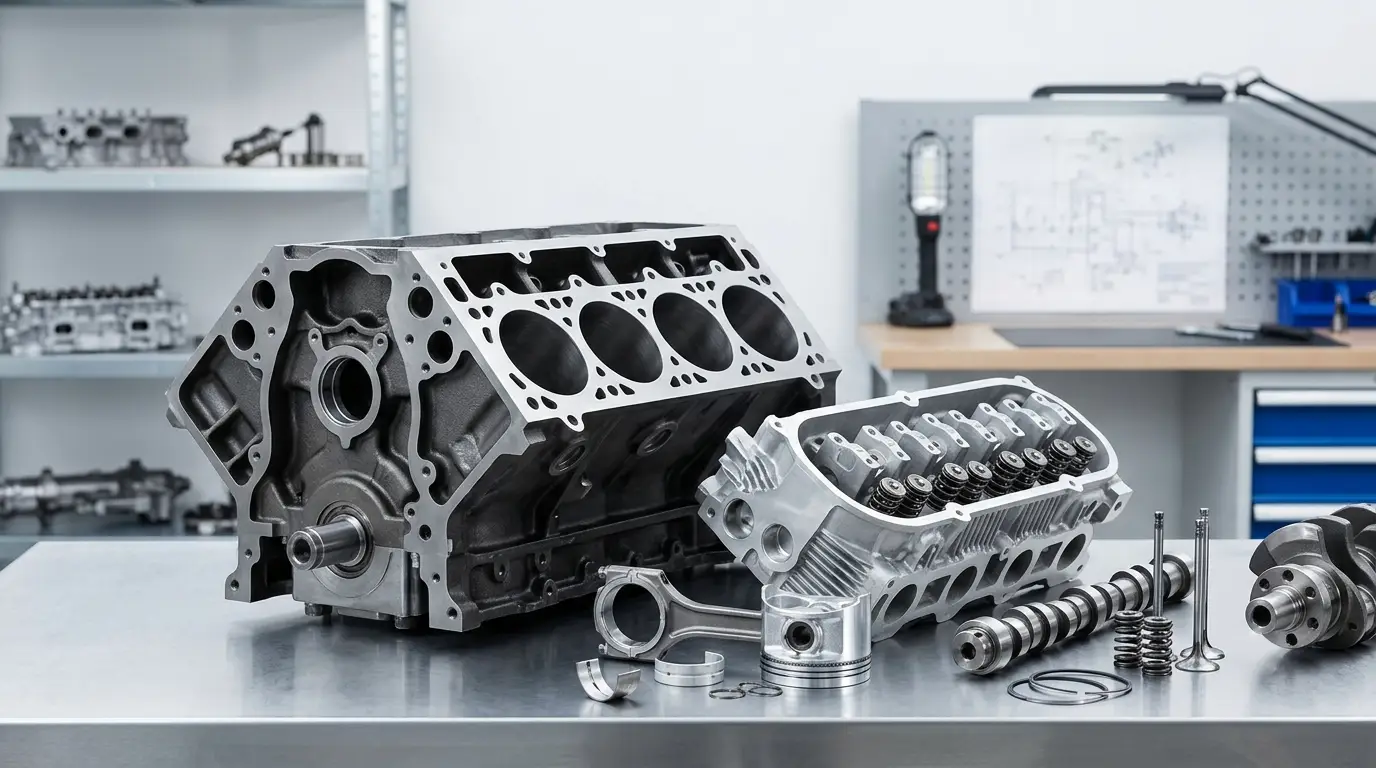
Matching displacement and configuration.
A mismatch here will result in improper fit and performance issues.
Manual vs automatic vs CVT matters.
Different transmission types are not interchangeable without major modifications.
Physical fitment is crucial.
Incorrect mounting points can make installation impossible.
Electrical systems must match.
Modern vehicles rely heavily on electronics - mismatched wiring can cause serious issues.
Controls engine and transmission performance.
Without proper ECU compatibility, the engine may not function correctly.
Important for legal and functional compliance.
Different regions and years may have different emission requirements.
Ensures proper fuel delivery.
Incorrect fuel system components can lead to performance issues.
Modern engines rely on sensors.
Mismatched sensors can trigger warning lights or affect performance.
Adds an extra layer of verification.
Part numbers provide precise compatibility confirmation.
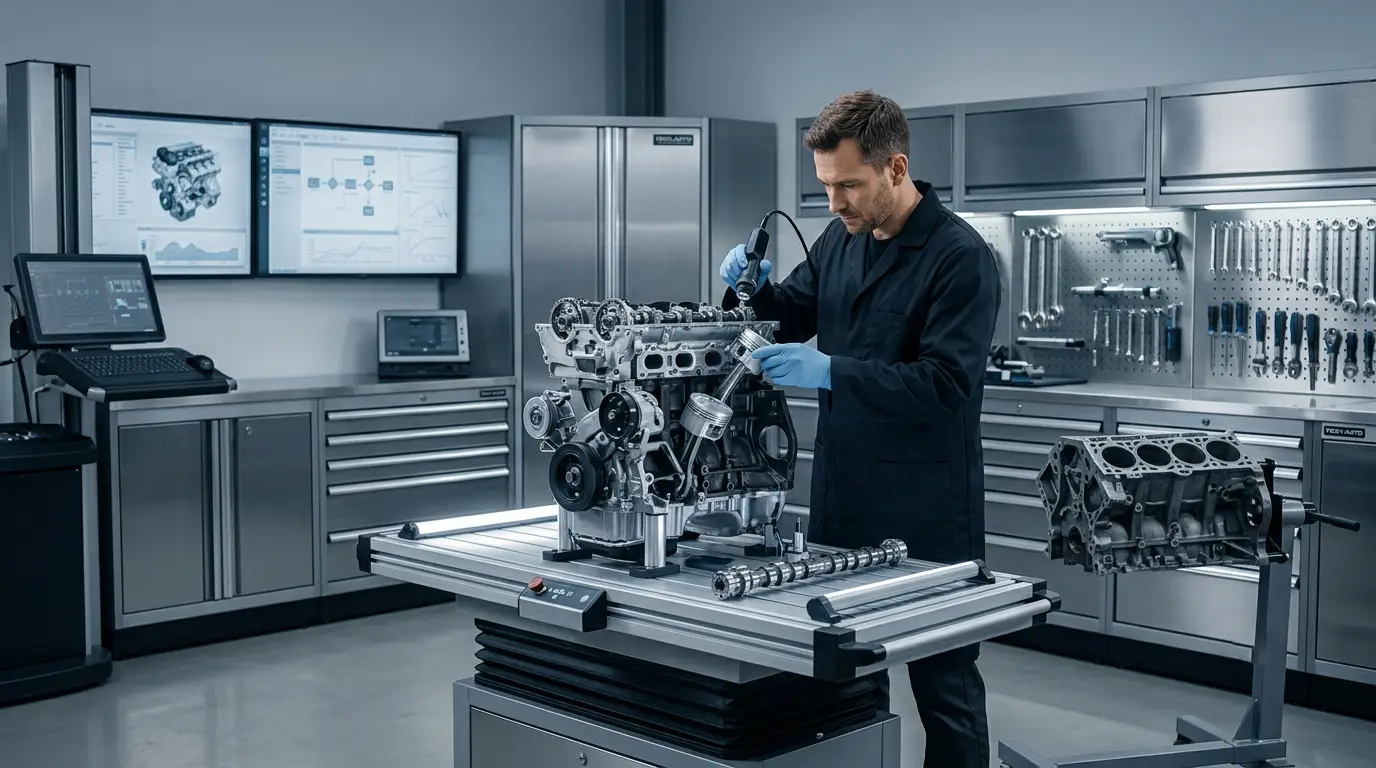
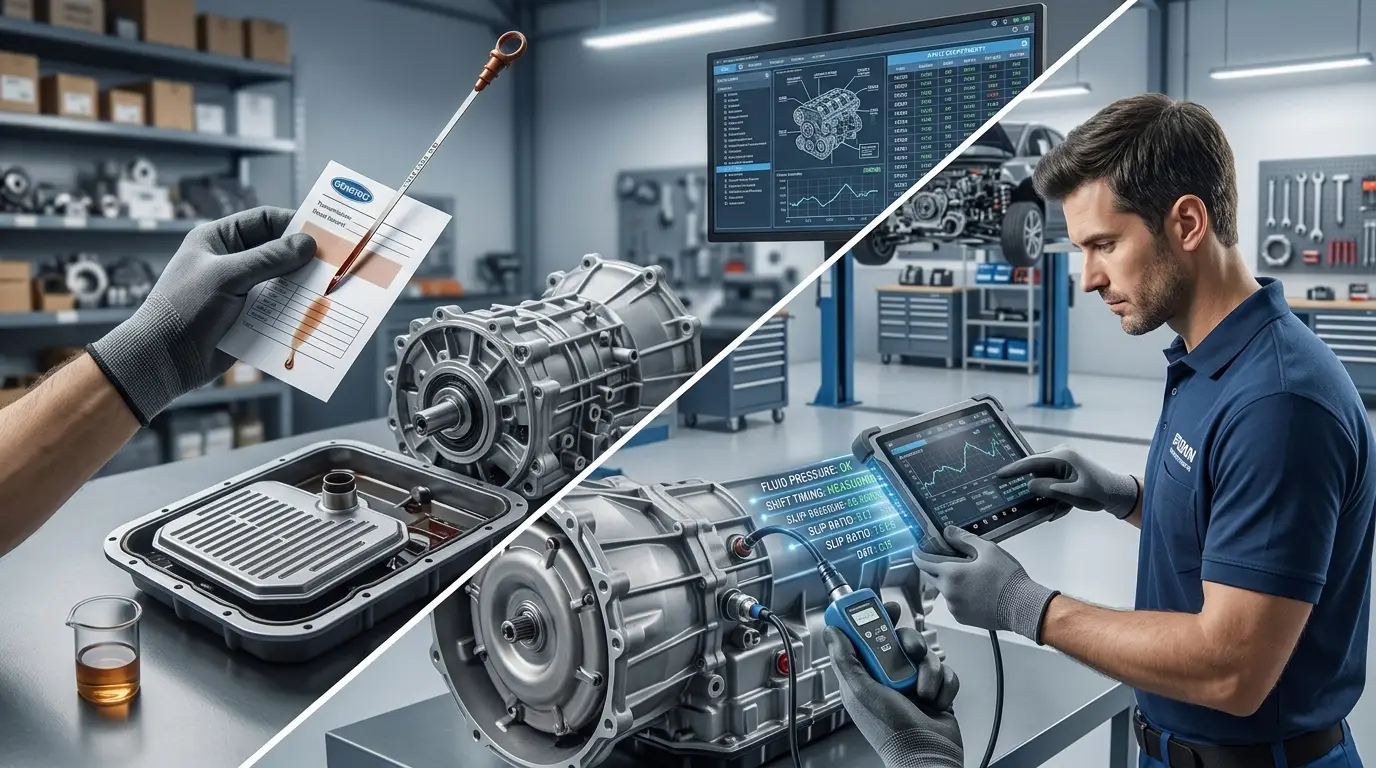
Compatibility isn’t just about fit - it’s about performance.
A compatible part still needs to be reliable.
Understanding where the part came from.
This helps ensure the part hasn’t been compromised.
Expert advice reduces risk.
Professional input can save time, money, and frustration.
Protect your investment.
Even with careful checks, having a backup plan is essential.
Avoiding these mistakes can prevent costly errors and installation headaches.
Taking the time to verify compatibility saves both money and stress.
Buying a used engine or transmission is a smart decision - but only when compatibility is carefully verified. From checking the VIN and engine codes to ensuring wiring and ECU compatibility, every detail matters.
Think of compatibility as the foundation of your purchase. Without it, even the best-quality engine or transmission won’t perform as expected. By following these steps, you can confidently choose the right component and enjoy reliable performance without unnecessary risks.
When in doubt, always double-check - and never hesitate to seek expert advice. A little extra effort upfront can save you from major problems down the road.
Sometimes, but only if specifications and compatibility match exactly. Always verify before buying.
The VIN and engine/transmission codes are the most reliable indicators.
In some cases, yes - especially if the engine differs slightly from the original.
In some cases, yes - especially if the aftermarket part causes a related failure.
Consult a professional mechanic or provide your VIN to the seller for verification.